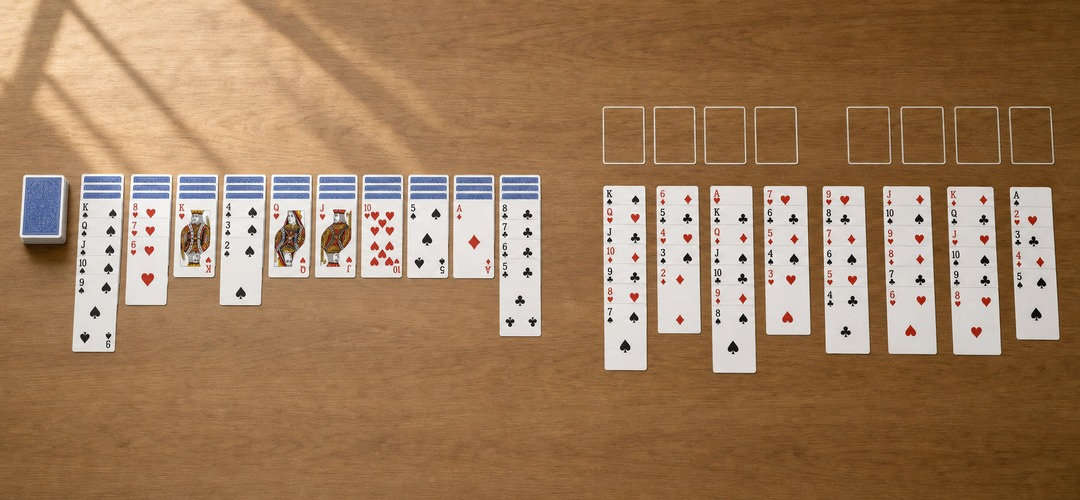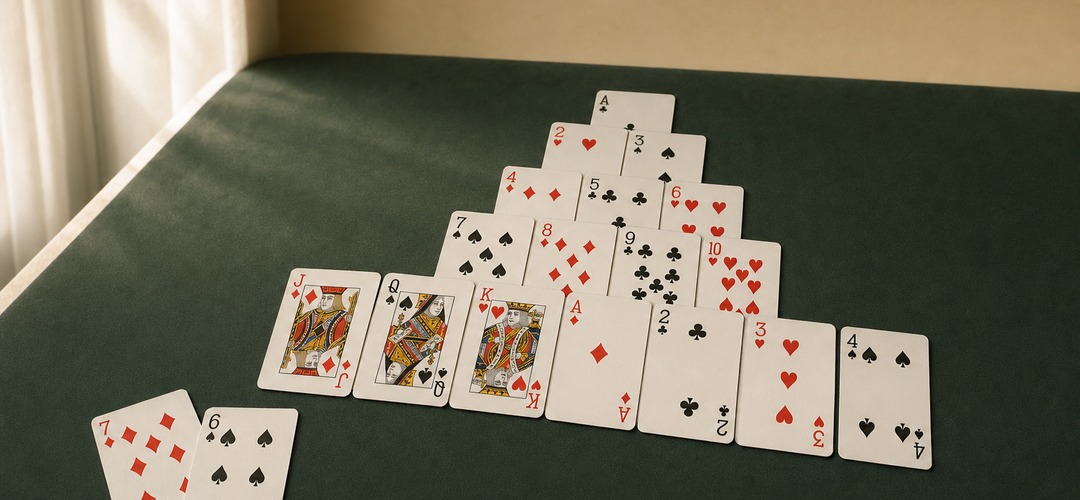
Have you ever stared at a FreeCell board, completely blocked, wondering if the game was rigged? It’s a frustrating feeling, but here is a mind-blowing fact to kickstart your confidence: in the original Windows 95 version of FreeCell, out of 32,000 numbered deals, only one single game was proven to be completely unbeatable (the infamous Game #11982).
Unlike other Solitaire variants where success depends heavily on the luck of the draw, FreeCell is a game of pure skill. In fact, mathematically, about 99.9% of all deals can be solved.
If your win rate is hovering around 50% or 60%, it’s not because you are unlucky—it’s because you haven’t mastered the inner mechanics of the board yet. Whether you are a casual player or looking to climb the leaderboards, these advanced FreeCell strategies will help you read the deck like a pro and push your win rate past the 90% mark.
Note: If you are still learning the basics of the game, make sure to check out our beginner's guide on how to play FreeCell before diving into these advanced tactics.
1. The Golden Rule: Protect Your Free Cells
It is right there in the name of the game, yet it’s the most common trap for players. The four free cells at the top left of your screen are your most precious resource. They are not a trash can for cards you don't know what to do with; they are a temporary holding zone.
-
The Golden Ratio: As a rule of thumb, always try to keep at least two free cells empty at all times.
-
The Math Behind It: Your ability to move long sequences of cards between columns depends directly on how many free cells are vacant. If all four free cells are packed, you can only move one single card at a time. This severely cripples your flexibility and usually leads to a quick game over.
If you must use all four free cells, your absolute priority for the next two or three moves must be to clear at least one of them out immediately.
2. Don’t Make a Move on Impulse: Study the Board
In classic Klondike Solitaire, you are forced to play fast and flip cards from the stock pile to see what’s next. FreeCell is different. From the very second the game starts, 100% of the cards are visible.
Treat FreeCell like chess. Before you click or tap a single card, take 30 seconds to analyze the layout:
-
Locate the Aces and 2s: Where are they buried? If they are at the top of a column, great. If they are trapped under a stack of seven cards, you need to start planning a tunnel to get to them.
-
Spot the Troublemakers: Look for high-value cards (Kings and Queens) that are sitting on top of low-value cards (3s and 4s). These are roadblocks that will stall your progress later.
-
Visualize 3 Moves Ahead: Never make a move just because you can. Make a move because it opens up a specific card you actually need.
3. Prioritize Creating Empty Columns
While keeping free cells open is crucial, creating an empty column in the tableau is even better. An empty column acts like a supercharged free cell. Not only can you store any card there, but you can also use it to park entire organized sequences of cards (e.g., Red 7, Black 6, Red 5) to shift them out of the way.
The moment you clear a column, your maneuvering power doubles. Use this newfound space to reorganize chaotic stacks, dig out buried Aces, or safely store a King that was blocking another column.
4. Beware the King Trap
If you come from a classic Solitaire background, you have a hardwired habit: "When a column opens up, put a King there." In FreeCell, break this habit immediately. Any card or sequence can be placed in an empty column. Don’t rush to fill a blank space with a King unless:
-
The King is currently blocking a long column of vital cards behind it.
-
You already have a long, organized sequence (Queen, Jack, 10...) ready to be placed underneath that King.
If you rush to fill an empty column with a King too early, you lose the fluid flexibility that an empty column provides.
5. Master the Art of Delaying the Home Cells
It is incredibly satisfying to watch cards automatically fly into the Home Cells (the foundation piles on the top right). However, automated software can sometimes sabotage your game.
Moving low cards to the foundation piles too early can leave you stranded. For example, if you send both Black 3s to the foundations, you can no longer use them in the main columns to hold the Red 2s. If those Red 2s are blocking other cards, you’ve just trapped yourself.
-
The Strategy: Keep your foundations balanced. Try to advance all four suits evenly. If your Hearts and Diamonds are at a 7, but your Spades and Clubs are still at a 2, you are significantly hurting your building options in the main tableau.
Put Your Strategy to the Test!
FreeCell isn’t a game of luck; it’s a game of patience, foresight, and tactical retreats. By protecting your free cells, planning your opening moves, and treating empty columns like gold, you will notice your win rate skyrocketing.
Now that you know the secrets of the pros, it’s time to put theory into practice. Head over to our main arena and see if you can solve your next layout on our completely free FreeCell Solitaire page!